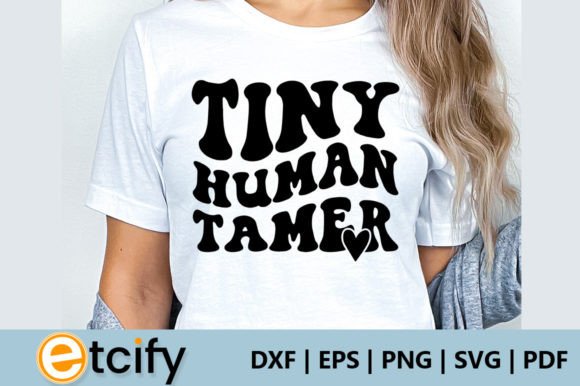
Tiny Human Tamer Retro SVG Review
As a designer who spends half her life troubleshooting stitch errors and the other half trying to make handmade goods look professional, I approach every new digital asset with a mix of hope and skepticism. The market is flooded with clip art that looks great on screen but falls apart under the needle. That is why I took Tiny Human Tamer Retro SVG for a serious spin before recommending it to my network of crafters and small business owners. This isn’t just another generic graphic; it is a design asset that demands to be evaluated for its practical application in real-world embroidery projects.
The title alone suggests a specific mood: humorous, affectionate, and slightly chaotic. For those of us creating personalized gifts or boutique merchandise, capturing that emotional resonance is just as important as the technical execution. When I first loaded this file into my digitizing software, I was immediately struck by the visual personality of the layout. It screams mid-century modern charm mixed with the relatable exhaustion of parenting. But does it translate well from vector lines to thread? Let’s break down how this embroidery project holds up when you move past the computer screen.
First Impressions and Visual Appeal
The retro aesthetic of the Tiny Human Tamer Retro SVG provides a strong foundation for brand consistency. In a crowded marketplace like Etsy, where thousands of sellers offer similar nursery decor or apparel, having a distinct visual style is crucial. This design feels nostalgic without being dated, which appeals to millennial and Gen Z parents who are currently driving much of the handmade gift economy. The shape language is bold, which is exactly what you want when working with limited hoop space.
From a design perspective, the composition balances negative space with focal points effectively. It doesn’t feel cluttered, which is a common pitfall in busy designs. This clarity translates directly to customer trust. When a buyer sees an embroidered patch or a t-shirt design that is clean and intentional, they perceive higher value. They assume the maker took care. Conversely, a muddy, over-stitched design can signal amateur hour. This particular embroidery file strikes a balance that suggests professionalism, making it a strong candidate for commercial embroidery projects aimed at building a reputable shop.
Real-World Application: The Tote Bag Scenario
To truly test the viability of this design, I imagined a specific use case: a custom embroidered tote bag for a baby shower gift. This is a staple item in any craft business, yet it presents unique challenges. You need something that reads clearly from a distance but still rewards closer inspection. The Tiny Human Tamer Retro SVG fits this bill remarkably well.
When placed on a sturdy canvas tote, the retro typography and illustrative elements pop against the natural fabric texture. It works beautifully as a standalone statement piece. However, I also considered its potential as part of a larger collection. Could it sit alongside matching bibs or burp cloths? Yes. The design has enough versatility to serve as a tote bag design anchor while maintaining cohesion with smaller accessories. It bridges the gap between a casual accessory and a curated gift set, which is essential for increasing the average order value for Etsy sellers.
I also visualized this on a sweatshirt for a "Mom Life" themed holiday gift. The humor resonates deeply in that context. The design allows for creative placement—perhaps centered on the chest for a classic look, or off-center for a more modern, asymmetric vibe. This flexibility is key for custom apparel decorators who need to adapt their assets to different client requests without losing the core identity of the product.
Technical Considerations and Stitch Clarity
No matter how pretty a vector looks, if it stitches poorly, it fails. Here is where the rubber meets the road. The Tiny Human Tamer Retro SVG appears to rely heavily on clean lines and solid shapes, which generally bodes well for satin stitches and fill stitches. Satin stitches are excellent for creating crisp edges on text and outlines, giving the final product that polished, store-bought finish. Fill stitches allow for smooth color transitions in any illustrative elements, reducing the risk of jagged threads.
However, we must talk about stitch density. If the design is too dense, it can become stiff and uncomfortable, especially on delicate fabrics. While I cannot confirm the exact stitch count without the actual digitized file, the visual weight of the original graphic suggests a moderate density. This is ideal for most home machines and even many industrial setups. It ensures that the design lays flat and doesn’t pucker the underlying material. For those concerned about durability, especially for items like aprons or kitchen towels that see frequent washing, a balanced stitch density is non-negotiable. It prevents thread breakage and maintains the integrity of the image wash after wash.
Another critical factor is thread colors. The retro palette likely lends itself well to classic thread choices—creams, soft yellows, muted teals, or dusty pinks. These colors not only fit the aesthetic but also hide minor imperfections better than stark whites or deep blacks. When selecting your thread colors, always consider the contrast against your chosen fabric. A light design on a dark background requires careful stabilizer selection to prevent show-through, while a dark design on light fabric needs high-opacity stitching to ensure visibility.
Where to Exercise Caution
Even the best designs have limitations. There are specific scenarios where using the Tiny Human Tamer Retro SVG requires extra diligence. First, avoid placing intricate details on curved surfaces like caps or hats unless you are using a specialized hat hoop and have tested the tension extensively. Curved fabrics distort straight lines, and fine details can get lost in the curve.
Similarly, be cautious with textured fabrics. A chunky knit blanket might swallow up the finer lines of the design, making it look blurry or indistinct. Thin or stretchy fabrics, such as jersey knits used for some t-shirts, require proper tear-away or cut-away stabilizers to prevent distortion during stitching. Without the right support, even a simple design can end up looking warped.
Also, consider the size constraints. While the design is versatile, attempting to shrink it down to fit a tiny 2-inch hoop might result in lost details. Small lettering or thin decorative accents can merge together if the resolution is too low. Always inspect the design in black and white mockups to check for contrast issues before committing to expensive materials. If the details disappear in grayscale, they will likely struggle in thread form as well.
Final Verdict for Makers and Sellers
In conclusion, the Tiny Human Tamer Retro SVG is a strong addition to any designer’s library of design assets. It offers a perfect blend of humor, nostalgia, and visual clarity that translates well across various mediums. Whether you are creating a heartfelt personalized gift for a friend or stocking shelves with small shop products, this design provides a reliable foundation for success.
For commercial embroidery purposes, remember to verify licensing terms. Just because a file is available for purchase does not automatically grant unlimited commercial rights for physical goods or digital resale. Protect your business by reading the fine print. Additionally, always test your designs on scrap fabric before running them on premium materials. This simple step saves time, money, and frustration.
If you are looking to add a touch of retro charm to your next embroidery project, this design delivers. It is practical, appealing, and technically sound for a wide range of applications. From holiday embroidery collections to everyday handmade products, the Tiny Human Tamer Retro SVG proves that good design is timeless—and highly stitchable.